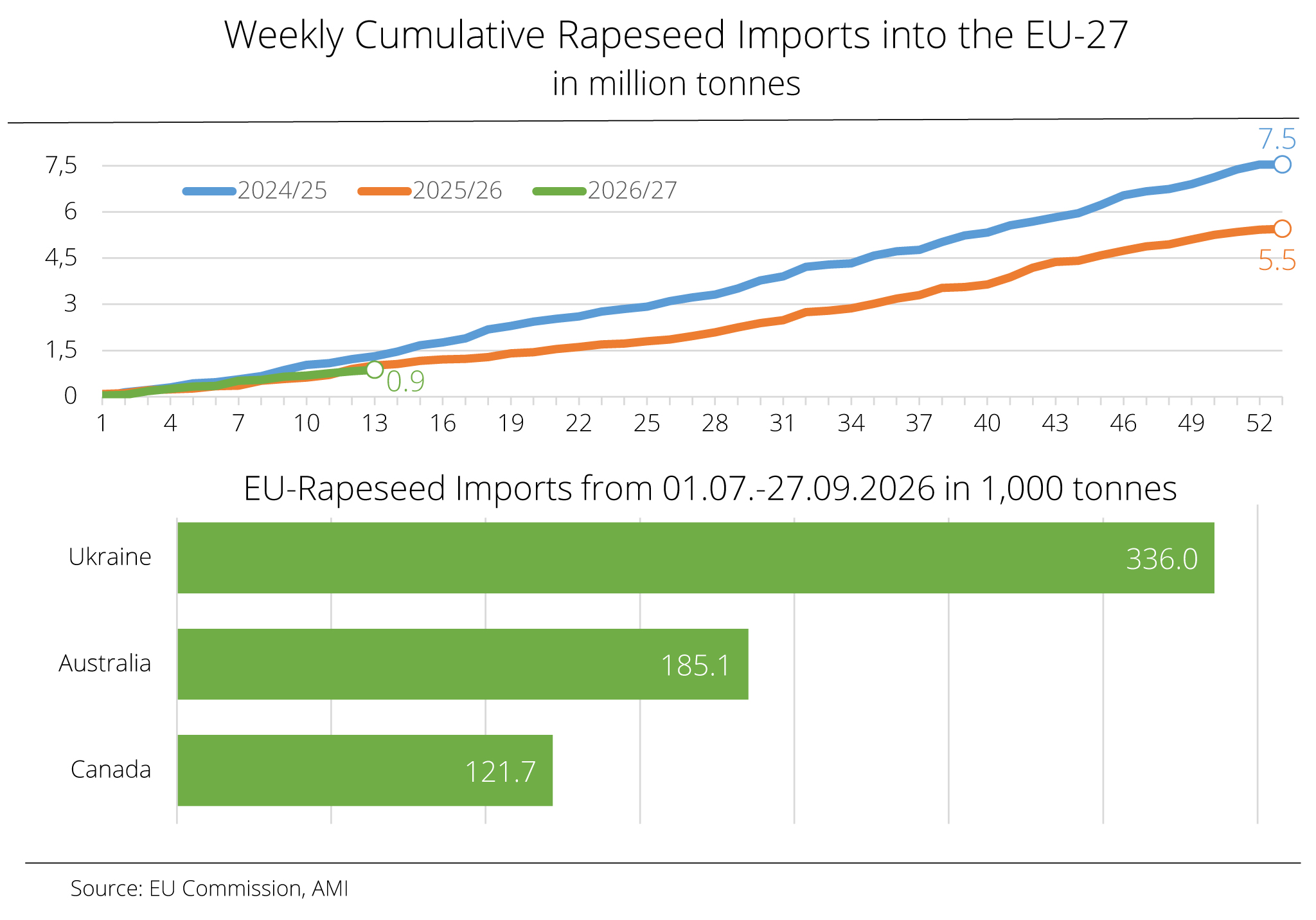




EU rapeseed imports fell sharply at the start of the 2026/27 season, signalling tightening feedstock availability for Europe’s biodiesel and HVO producers despite a smaller domestic harvest.
New figures show that rapeseed arrivals from July to September totalled around 871,500 tonnes, a 14% decline year‑on‑year, with logistical constraints in Ukraine continuing to reshape trade flows.
Ukraine remained the EU’s largest supplier, but volumes dropped significantly. As noted in the source document, “imports remained below the 599,900 tonnes recorded from July through September 2025”, despite a larger Ukrainian harvest.
Ongoing bottlenecks — particularly in seaborne logistics — have forced exporters to rely more heavily on rail, limiting throughput and reducing availability for EU crushers and biofuel producers.
Australia strengthened its position as the EU’s second‑largest supplier, shipping 185,100 tonnes, up 35% on the year.
Canada followed with 121,700 tonnes, a sharp increase from near‑zero levels in 2025. According to UFOP, this shift reflects Ukraine’s constrained export capacity, China’s trade dispute with Canada, and rising freight rates from Australia.
Crucially for the biofuels sector, Canadian rapeseed is largely channelled into renewable fuel production due to restrictions on genetically modified varieties in EU food markets. As the document states, “the biofuels market [is] by far the most important trade channel for Canadian rapeseed oil.”
Canada’s early recognition under the EU’s updated NUTS 2 GHG values further strengthens its role as a compliant supplier for RED III‑aligned biofuel pathways.
With RED III mandating higher renewable fuel quotas through 2026–27, the decline in early‑season rapeseed imports underscores the importance of diversified supply chains and certified feedstock sources.
Market participants will be watching closely to see whether logistical improvements in Ukraine or expanded flows from Australia and Canada can stabilise availability in the months ahead.
EU rapeseed import slowdown highlights shifting biofuel feedstock dynamics