


Features
In the quest for a greener and more sustainable future, the maritime industry has found itself at the forefront of efforts to reduce greenhouse gas (GHG) emissions.
The European Union’s FuelEU Maritime regulation and the International Maritime Organisation’s (IMO) decarbonisation strategy have set the scene for decades to come, in a critical transition for the shipping industry.
With the…
Read More »
Read More »
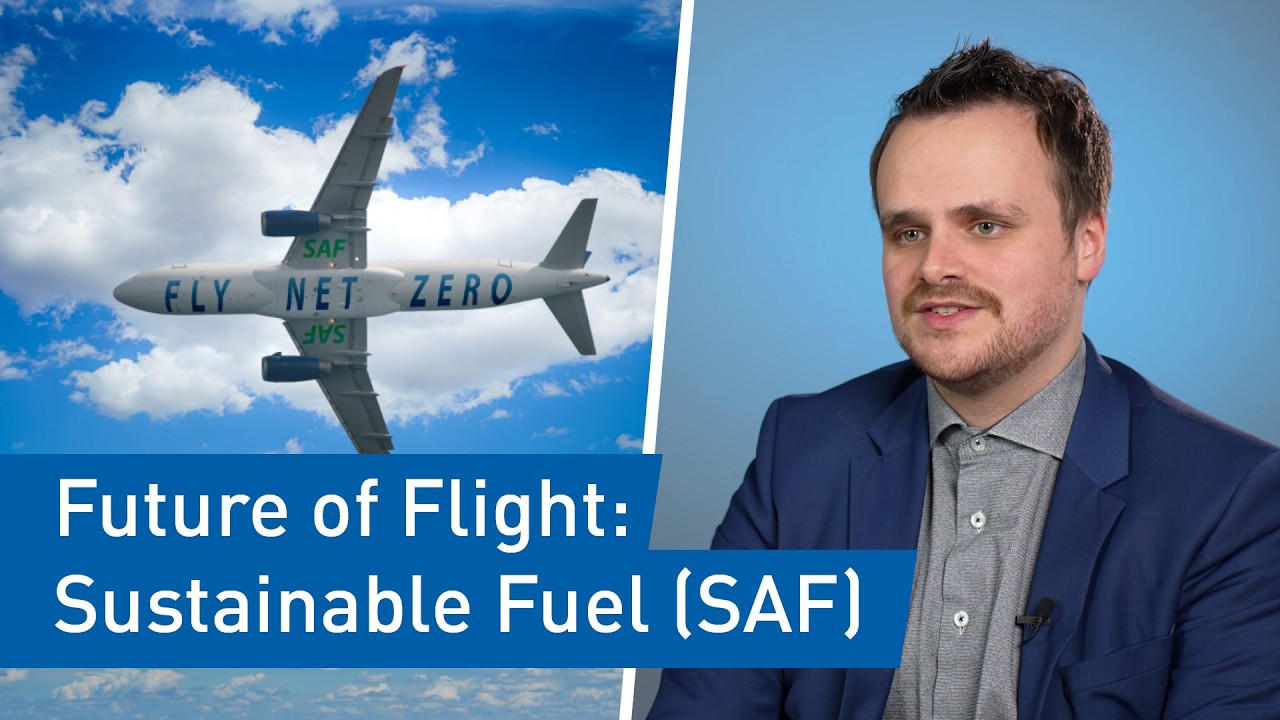
Much of the industry conversation on sustainable aviation fuel (SAF) is focused on production. Making more molecules available is important, but we also need to unlock the ability to deliver them to the aircraft.
Perhaps the supply chain logistics are not as attention grabbing as production itself, but the industry has to focus on all aspects of the supply chain if we are serious about scaling…
Read More »
Read More »
There have been several milestones in the history of aviation over the last 120 years.
Of course, it all began with the Wright brothers and their short flight along the shores of Kitty Hawk that set the industry literally taking to the skies.
Other milestones include Louis Bleriot’s foray across the channel – 22 miles – in 1909 and Charles Linbergh’s journey across the Atlantic, from…
Read More »
Read More »
Biofuels play a key role in reducing greenhouse emissions by providing an alternative to traditional fossil fuels.
According to the Energy Information Administration (EIA), modern bioenergy is the largest renewable energy source globally, accounting for 55% of renewable energy and over 6% of the global energy supply.
The EIA’s Net Zero Emissions by 2050 Scenario (NZE) sees a rapid increase…
Read More »
Read More »
Sufficient oxidation and cold stability is essential for the safe use of biodiesel (FAME).
The additives used must not have any negative interactions with the FAME itself or the base diesel fuel and its additives.
Only two antioxidants and one flow improver were able to pass the challenging no-harm tests in 2023 and be included on the no-harm lists.
Fatty acid methyl ester (FAME, biodiesel)…
Read More »
Read More »
The aviation industry has been working on bio-aviation fuels since the late 2000s.
The first flight using bio-aviation fuel took off in 2008 - it was flown by Virgin Atlantic from London to Amsterdam. Since then, many more airlines have carried out flights using bio-aviation fuels.
In 2009, the EU Emission Trading System (EU ETS) which sets a cap on how much CO2 can be emitted by different…
Read More »
Read More »
When the US Congress expanded the nation’s Renewable Fuel Standard (RFS) in 2007, some ill-informed environmental advocates and ideological academics started sounding the alarm bell.
They argued farmers could not possibly produce enough grain to grow renewable fuel production while meeting traditional demands for animal feed.
They claimed using more crops for renewable fuels would cause…
Read More »
Read More »
Any review of business or technical development across Asia, whatever the subject, will almost inevitably highlight the region’s enormous potential. Looking at the way ahead for biofuels is certainly no exception, especially now.
India’s leadership of the Global Biofuel Alliance, launched during the G20 summit in New Delhi at the beginning of September, heads the current list of Asia’s…
Read More »
Read More »
Can you tell our readers a little bit about Valueskies and the work it does in the renewable sector?
ValueSkies is a Colombian development company focused on the structuring and implementation of projects to produce SAF, renewable diesel, green chemistry, and second-generation pellets with a high social and environmental impact.
The company’s approach is to produce drop-in low-carbon fuels,…
Read More »
Read More »
It all began in 2005 in a leaky greenhouse on the campus of Iowa Central Community College in Fort Dodge, Iowa.
I was tasked with the job of creating a biofuels technology programme and teaching laboratory for students, who could then learn the basic skills to allow them to work in one of the many surrounding biofuels processing facilities here in Iowa and in the Midwest.
Early development…
Read More »
Read More »
To reduce our reliance on fossil fuels and work towards sustainability, the European Commission has introduced the Fit-for-55 package.
This is a set of European policies implemented to help the transition of Europe to climate neutrality by 2050. These policies aim to reduce Europe’s greenhouse emissions by at least 55%, as well as strengthen European partnership and unity on climate action…
Read More »
Read More »
Prices stabilising, overall production exceeding demand and stocks at an all-time high - the current picture seems rosy for the oilseed processing industry. Following an especially challenging 18 months, these signs of partial recovery are surely a relief for biofuel processors and – in many respects – there is more good news to come.
As nations and corporations step up plans to replace…
Read More »
Read More »
Governments are setting ambitious targets for the use of synthetic fuels in the aviation sector.
However, clarity is still needed before the industry can step up to meet these objectives. Recent policy changes mean sustainable aviation fuel (SAF) will become a reality within the sector’s decarbonisation efforts.
Over 21 gigatons of CO2 – this is the amount of CO2 emissions that airlines…
Read More »
Read More »