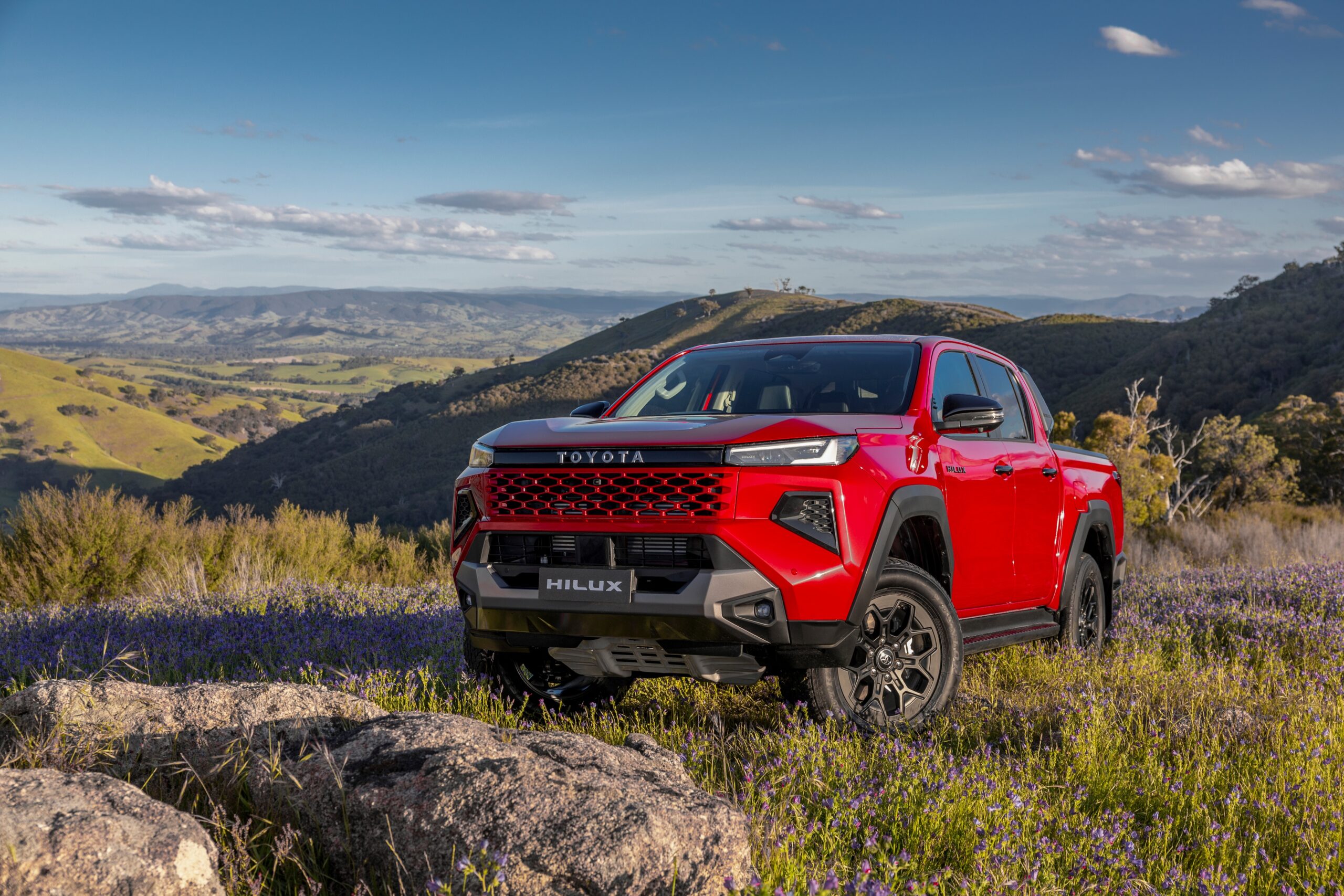




Toyota is exploring the use of low-carbon liquid fuels (LCLFs) as part of its multi-pathway approach to decarbonisation, which can help the transition to lower-emission motoring while achieving substantially the same levels of the performance, reliability and range Australians rely on.
Toyota and Ampol are currently undergoing a trial using 100% hydrotreated vegetable oil (HVO100) biofuel, meaning no diesel is required, which is compatible for use in all HiLux vehicles built from mid-2015 and equipped with the 1GD or 2GD turbo-diesel engine.
With more than half a million N80 and N90 generation HiLux vehicles on Australian roads, switching from diesel to LCLF can have a meaningful impact in reducing lifecycle emissions for the existing HiLux car parc.
All existing Toyota diesels are capable of running on a 20% LCLF blend today. Toyota is also studying the expansion of other models to be compatible with HVO100.
Toyota Motor Corporation Australia CEO and president Matthew Callachor said: "At Toyota, we believe decarbonisation requires a multi-pathway approach that gives customers practical choices while supporting Australia's transition to a lower-emissions future.
"We are excited to work with the industry to explore the potential of alternative and low-carbon fuels to support decarbonisation in the automotive industry.
“The confirmation that HiLux models from 2015 onwards can run on 100% hydrotreated vegetable oil is validation that the vehicle technology exists today.
"By bringing together the automotive and energy sectors, we have an opportunity to improve fuel security and reduce emissions from both new and existing vehicles."
Toyota supports further use of low-carbon fuels