



ExxonMobil has successfully supplied a B30 0.50% sulphur marine residual fuel blend (B30 VLSFO), made using fatty acid methyl ester (FAME) Distillation Residue, to Wallenius Wilhelmsen.
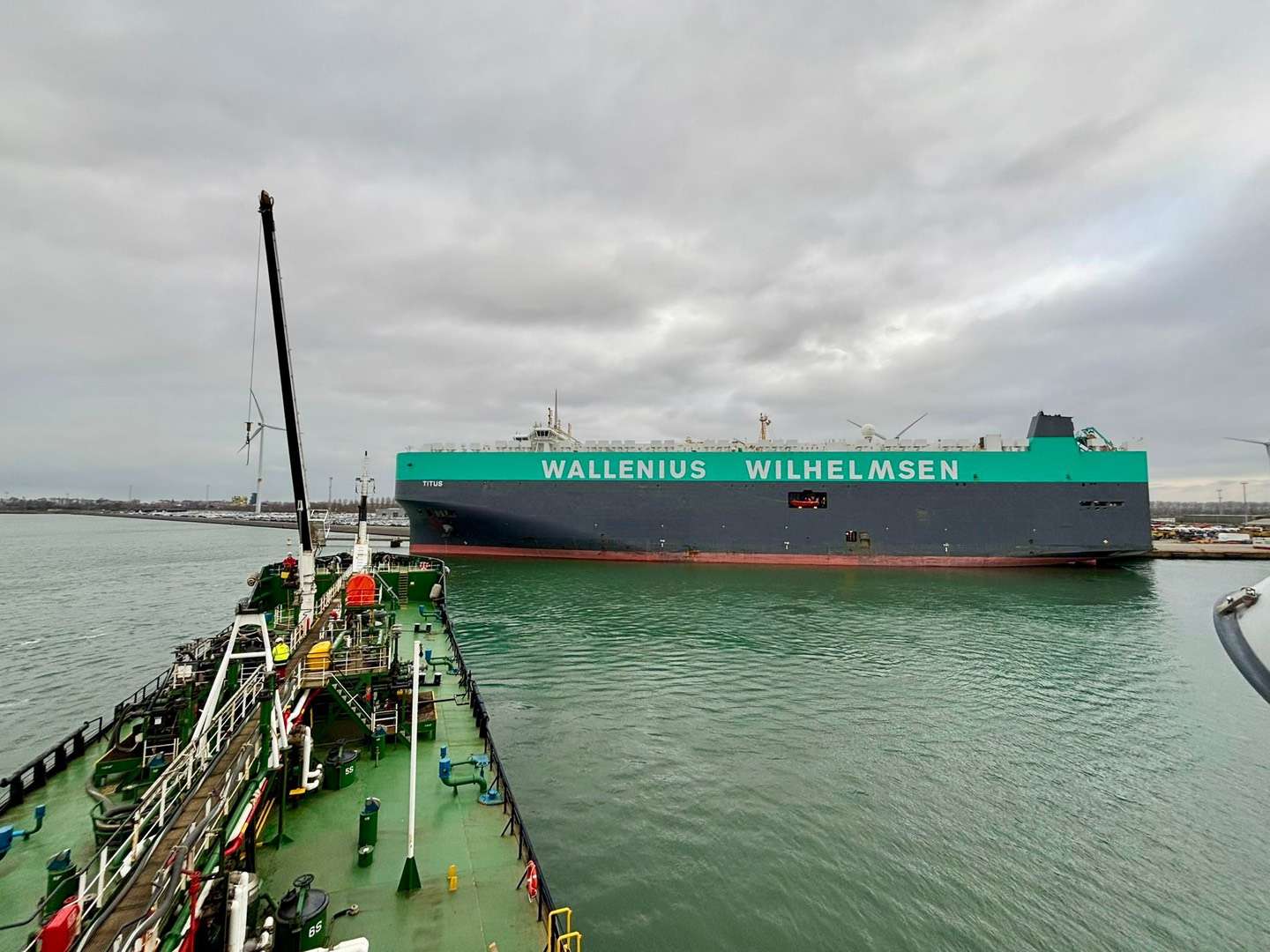
The bio marine fuel blend was bunkered by the vehicle carrier Titus in Zeebrugge ahead of the sea trial, marking a significant milestone in ExxonMobil’s journey towards supplying the marine industry with lower GHG emission fuels.
The B30 VLSFO fuel meets the RMG380 residual fuel oil classification and complies with ISO 8217:2017 with the exception of the bio blend component. It shares similar drop-in properties to a B30 VLSFO made with FAME produced from used cooking oil (UCOME).
The sea trial was successfully completed with no operational concerns.3 The B30 VLSFO batch was bunkered without issue. The onboard storage and handling of B30 VLSFO did not result in any filtration or purification issues. Engine performance remained stable, as confirmed by comparing key parameters recorded in the performance and condition monitoring reports before, during and after the trial.
“This successful sea trial highlights a practical, cost-effective pathway for customers to reduce their lifecycle greenhouse gas emissions while maintaining operational performance. By leveraging FAME Distillation Residue, ExxonMobil can offer a drop-in solution that supports compliance with evolving EU regulations and helps operators advance their lower GHG emission goals confidence,” said Gideon Simmelink, account manager marine fuels, ExxonMobil.
“Wallenius Wilhelmsen has a long-standing collaboration with ExxonMobil. This trial supports our efforts to assess new fuel options and advance our decarbonisation ambitions,” said Kari Haugen, senior manager energy sourcing, Wallenius Wilhelmsen.