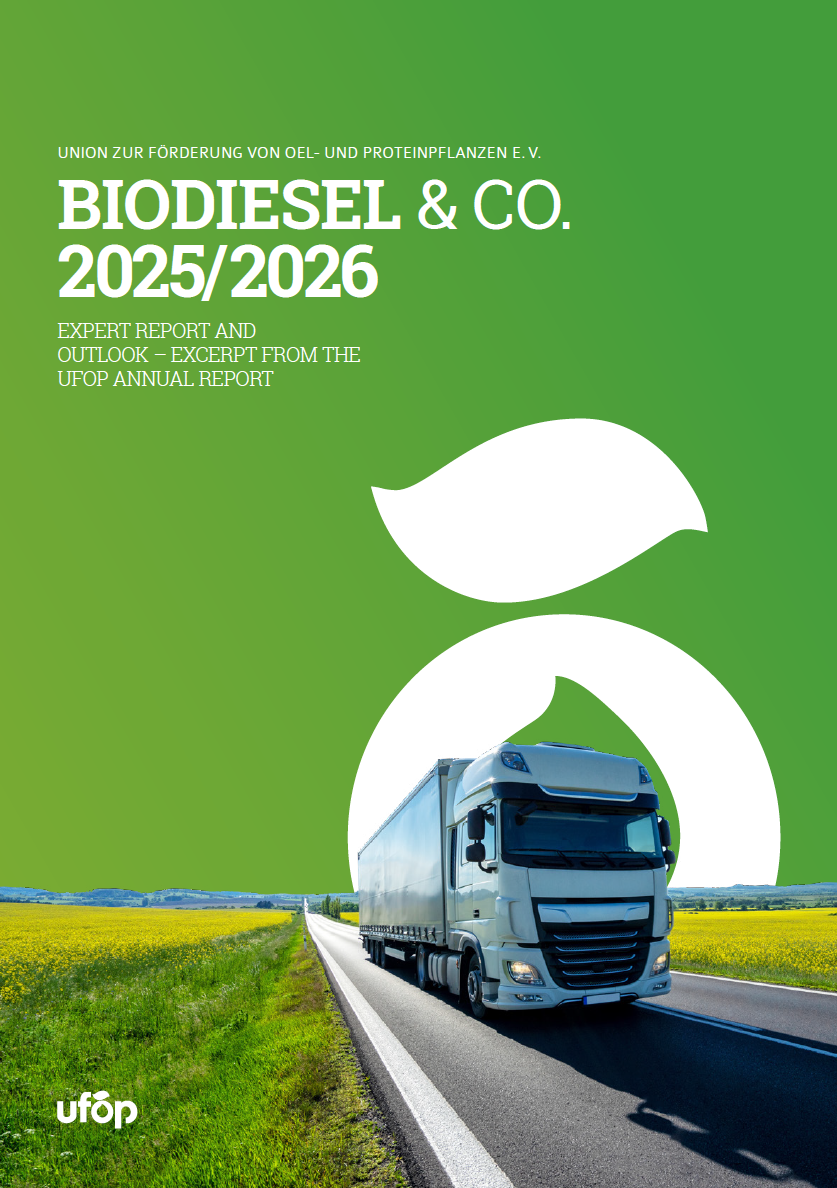




The Union for the Promotion of Oil and Protein Crops (UFOP) has published the latest edition of its annual Biodiesel & Co. 2025/2026 progress report, providing a comprehensive overview of legislative developments, market trends and policy challenges affecting the European biofuels sector.
Now in its 17th edition, the publication examines key regulatory measures introduced at both European and national levels to support the use of biofuels, while also assessing the wider role of renewable fuels in climate protection and energy policy. The report opens with an evaluation of current climate strategies against the backdrop of increasingly visible impacts of climate change and growing pressure on public finances.
Among the report's key focus areas is Germany's amended greenhouse gas (GHG) quota legislation, which came into force retrospectively from January 2026. According to UFOP, the revised rules will have important implications for the feedstock mix used in biofuels that count towards national decarbonisation targets.
The report also outlines UFOP's preferred fuel strategy, including calls to maximise existing blending opportunities and make greater use of sustainable biofuel volumes already available to the market. In addition, it assesses feedstock availability across the biodiesel and hydrotreated vegetable oil (HVO) sectors and evaluates future supply potential.
A notable section addresses the long-running indirect land-use change (iLUC) debate surrounding soya-based biofuels. UFOP argues that the issue has effectively been resolved through the implementation of the EU Deforestation Regulation (EUDR) and the traceability and verification requirements established under RED II.
Supported by detailed production and consumption statistics covering Germany, the wider European Union and global markets, the report serves as a valuable reference for policymakers, industry stakeholders and analysts seeking insight into the evolving biofuels landscape and its contribution to decarbonisation efforts.
UFOP highlights climate policy challenges in new biodiesel progress report