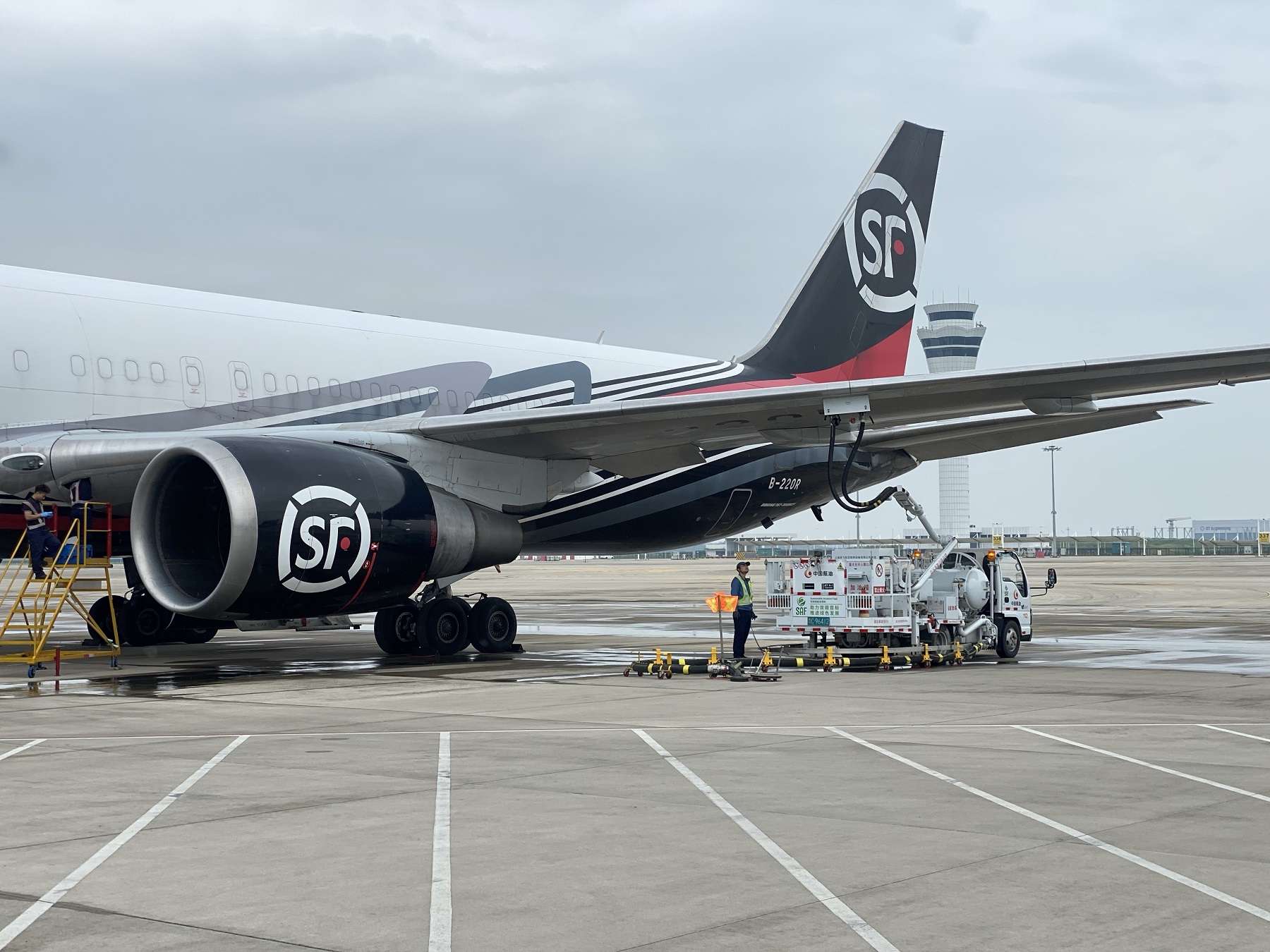




EcoCeres has partnered with SF Group and China National Aviation Fuel Group (CNAF) to launch a customised sustainable aviation fuel (SAF) commercial fuelling programme in collaboration with the Second Research Institute of the Civil Aviation Administration of China (CASRI).
Under the programme, SAF produced by EcoCeres will be blended by CNAF and supplied to outbound freighter flights operated by SF Airlines, enabling up to a 90% reduction in greenhouse gas emissions compared to conventional jet fuel.
Ezhou Huahu International Airport in Hubei, SF Airline’s cargo hub and a key aviation gateway under China’s 14th Five-Year Plan for Port Development, plays a central role in SAF fuelling and perations for this initiative.
This collaboration builds on EcoCeres’ prior SAF pilot program in China, codenamed “Project Spark”.
In the initial phase, SAF produced at EcoCeres’ Zhangjiagang facility was blended by CNAF and used to fuel commercial flights at Chengdu Shuangliu International Airport, validating the full value chain from production and transportation to blending and deployment.
The project also leverages AnchorTrace, a Scope 3 environmental attributes platform jointly developed by CNAF and CASRI, enabling full lifecycle tracking, registration, and retirement of SAF environmental attributes.
By integrating renewable fuel production, a transparent environmental attribute tracking system, and real-world aviation logistics demand, the project validates a decarbonisation model that is both technically viable and commercially sustainable.
It provides strong support for the green transformation of China’s air cargo sector and accelerates progress in hard-to-abate transport segments such as aviation and express logistics.
“This project demonstrates how SAF can pragmatically and efficiently connect renewable fuel producers, aviation fuel infrastructure providers, and cargo operators in a results-oriented way,” said James Tam, co-chairman of EcoCeres. “By integrating SAF into existing aviation fuel systems, we are working together with our partners to build a replicable, scalable and verifiable pathway for lower emissions air cargo development in China.”
EcoCeres, SF Group and China National Aviation Fuel collaborate to advance low-carbon air cargo development