



Global biofuel demand is expected to surge, with the IEA projecting a 23% increase by 2028.
Renewable diesel and ethanol are expected to account for two-thirds of this growth with new regulations such as FuelEU stimulating uptake.
However, the domestic outlook for US ethanol appears more uncertain due to the acceleration of electric vehicle (EV) adoption — despite potential headwinds from federal policy.
Although the national goal to have 50% of new electric vehicles by 2050 was revoked at the beginning of this year, market analysts suggest that EV demand will continue to grow in line with overall market expansion.
State-led initiatives — particularly California’s Advanced Clean Cars II programme, which requires 100% of new vehicle sales to be zero-emission by 2035 — are gaining traction in 11 additional states, including the major vehicle markets of New York and Massachusetts.
These will play a key role in shaping the future fuel landscape. Along with improved vehicle efficiency, the continued penetration of EVs into road transport will reduce demand for ethanol as a petrol-blending agent.
To remain competitive and futureproof revenue, Midwest bioethanol producers must diversify revenue streams and explore new markets.
Capturing the value of CO₂
Midwest ethanol producers are increasingly aware of the potential value in their biogenic carbon dioxide (CO₂) waste stream.
The 45Q tax credit of $85 (€74) per metric tonne makes carbon capture and sequestration an attractive new revenue stream.
However, transporting CO₂ for sequestration poses significant challenges. Not all plants are near existing pipelines and securing approval for new pipelines across multiple jurisdictions is a lengthy and complex process.
For instance, one major pipeline project proposes to connect plants across Iowa, Minnesota, North Dakota, South Dakota and Nebraska, transporting captured carbon to the North Dakota basin for sequestration.
However, the initiative faces strong public opposition from landowners, environmental groups and local communities.
As a result, progress may be delayed for years — meanwhile, millions of dollars’ worth of CO₂ continues to be lost through vent stacks.
The value proposition for e-methanol
An emerging opportunity worth close attention is the growing interest in synthetic fuels — particularly e-methanol — as marine fuel.
E-methanol is produced by combining green hydrogen with biogenic CO₂, which can be directly sourced from ethanol production.
The resulting liquid product can be transported via rail, avoiding the complicated and time-consuming permitting processes associated with pipelines.
For ethanol producers, this provides greater certainty in executing revenue diversification projects.
Europe’s demand for e-methanol is especially promising due to new regulatory pressures.
On 1 January, the European Union implemented the FuelEU Maritime regulation, which mandates a progressive reduction in the greenhouse gas intensity of fuels for all ships over 5,000 gross tonnes calling at EU ports.
The reduction begins at 6% by 2030 (against 2020 levels), increasing to 80% by 2050.
The regulation is technology-agnostic, but ships will also be required to use at least 2% renewable fuels of non-biological origin (RFNBO) per year from 2034. E-methanol is expected to see rapid uptake as a marine fuel to meet this demand.
Engine manufacturers are already producing dual-fuel engines that run on methanol and major shipping companies are retrofitting their fleets.
For example, Maersk recently completed the methanol dual-fuel conversion of its 14,000 TEU container ship, the Maersk Halifax, with a projected 90% reduction in CO₂ emissions.
Maersk is also investing in new dual-fuel vessels as part of its goal to achieve net-zero operations by 2040.
Fast-tracking delivery to meet demand
The global e-methanol market is poised for dramatic expansion, with some forecasts estimating a compound annual growth rate of over 25% between 2024 and 2031— equivalent to a sixfold increase.
Meeting this demand will require rapid scaling of production capacity, making speed of design and construction a critical advantage.
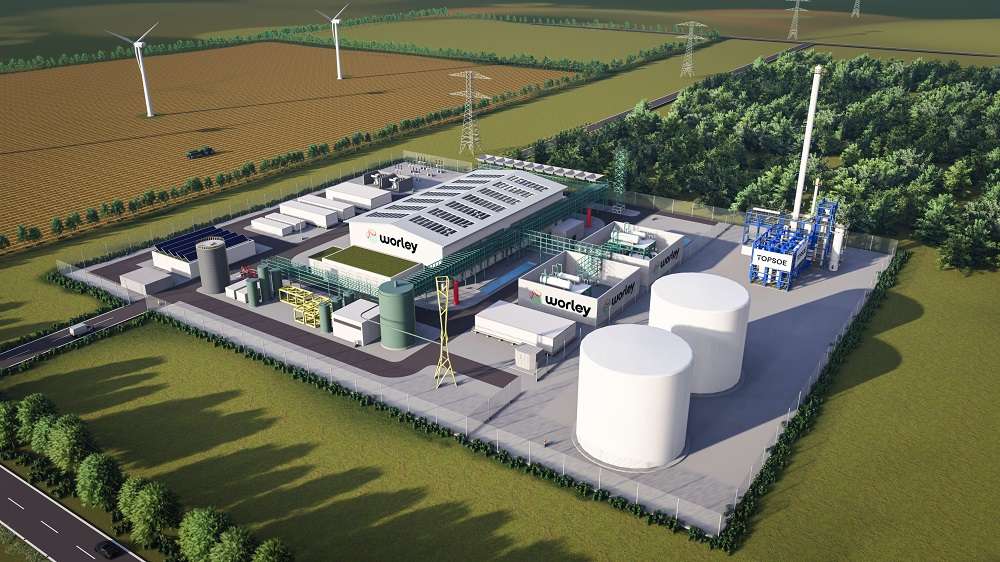
While a typical e-methanol plant takes four to six years to build, Worley has partnered with Topsoe, a global leader in catalysis and process technology, to dramatically accelerate delivery.
Their standardised, modular production model reduces development time for plants producing up to 600 metric tonnes per day.
By adopting a "design once, build many" approach, the partnership enables faster project delivery and greater flexibility in facility design.
Core components — such as technology licensing for green hydrogen and methanol synthesis as well as the majority of engineering and cost parameters — are pre-defined.
This means each plant only needs site-specific adaptations like civil works, risk adjustments and final safety checks.
The result is lower levelised cost of e-methanol production and a shorter time to revenue.
This model has already been trialled successfully in South America and the Middle East and has also proven effective for other clean energy technologies such as green hydrogen.
This modular, standardised approach is applicable to a range of energy transition initiatives.
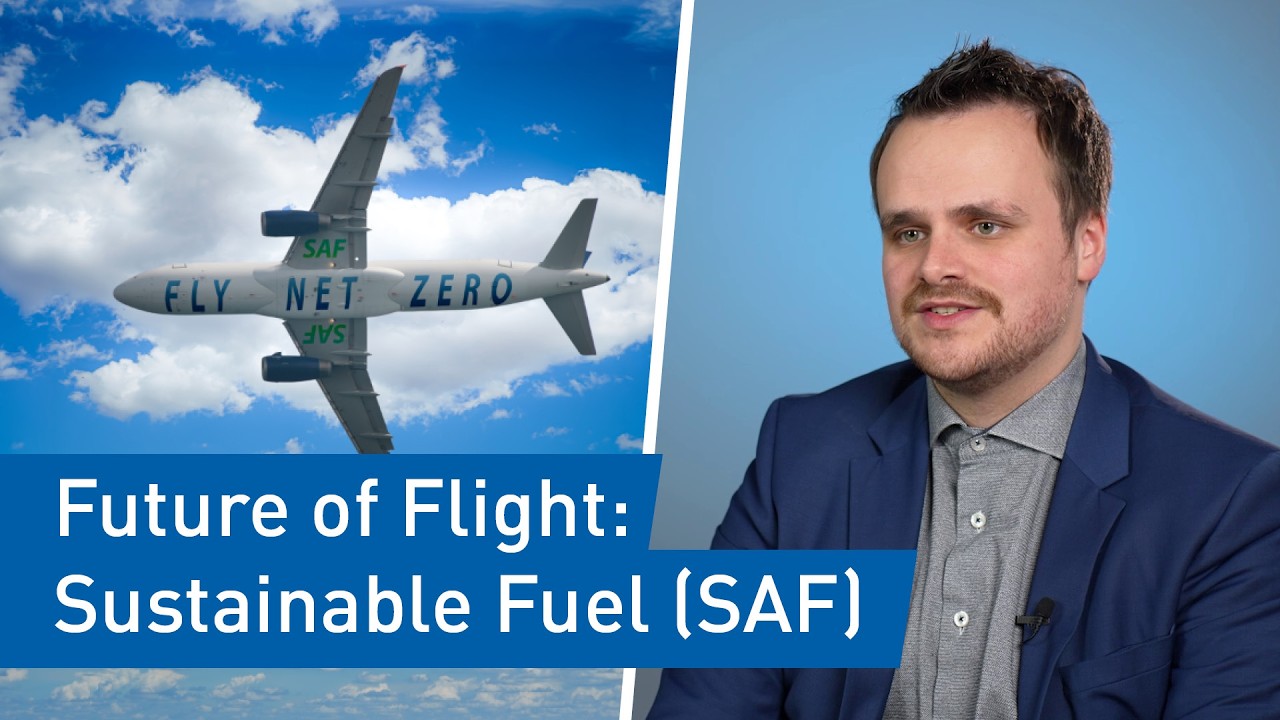
It could equally be used to accelerate production of sustainable aviation fuel by enabling ethanol-to-jet fuel conversion plants.
For now, ethanol producers in the Midwest have a compelling opportunity: capture their CO₂ and convert it into high-value e-methanol for the marine fuel market.
A faster, modular path to construction could unlock new revenue and position producers for long-term sustainability.
Ethanol evolution