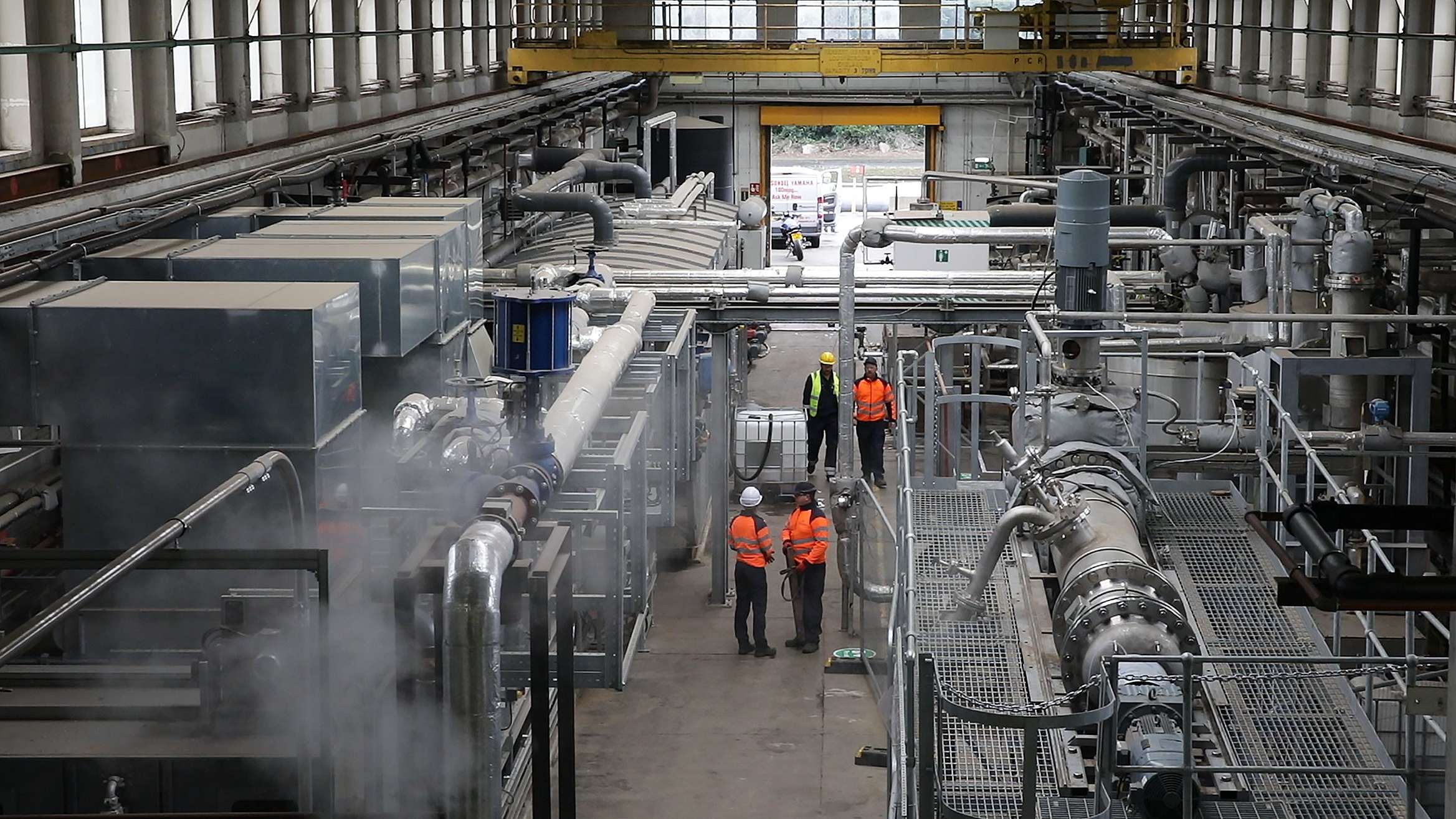




Nova Pangaea Technologies, the UK company with a unique process to create sustainable aviation fuel (SAF) from waste biomass, has completed successful endurance trials that further validate its technology.
The trials, which took place at its demonstration plant on Teesside, show continuous stable operation in production runs of up to 72 hours and achieved above target yields.
It marks another step forward for Nova Pangaea, which will be raising funds to progress its first commercial plant, and comes as the aviation industry seeks ways to scale up SAF production using other sustainable raw materials to end the current dependence on waste oils and fats.
Nova Pangaea is working with British Airways and LanzaJet on Project Speedbird, an initiative supported by the UK government to produce carbon-negative aviation fuel from local waste biomass to decarbonise the aviation sector. For Speedbird, Nova Pangaea will construct four UK facilities to produce bioethanol from local wastes for upgrading to SAF.
Nova Pangaea’s REFNOVA process converts waste biomass and residues, such as wood chips, sawdust or wheat straw, into ethanol, which can be used to make SAF and renewable diesel. It also produces a valuable co-product, biochar, which permanently captures carbon and makes the whole process carbon negative – removing more CO2 from the atmosphere than it releases.
The latest trials used softwood residues from timber processing. Multiple runs were carried out processing up to 3 tonnes of feedstock per day.
They follow initial smaller-scale trials in early 2025 which demonstrated the viability of the process outside of the laboratory. More trials will take place next year to fine tune the design of the first commercial-scale plant.
Stewart Stewart, CEO of Nova Pangaea, said: “The latest trials have validated our technology and should further underpin the confidence of investors on our journey towards building our first commercial plant.
“The SAF industry is currently at a critical point. Demand is increasing and supply chain shocks such as in the Middle East show the need to find an alternative to fossil fuels, yet aviation is currently reliant on SAF from a single feedstock, which will not be enough to meet growing SAF demand.”
Sustainable aviation fuel pioneer completes successful trials