




Indonesia and Malaysia dominate the world market for palm oil as both countries account for the bulk of global exports and changes in their output are central to international supply.
However, prospects for further growth in supply remained restrained.
In Indonesia, production is expected to remain at a high level of 45 million tonnes, there is little support for output growth from area expansion.
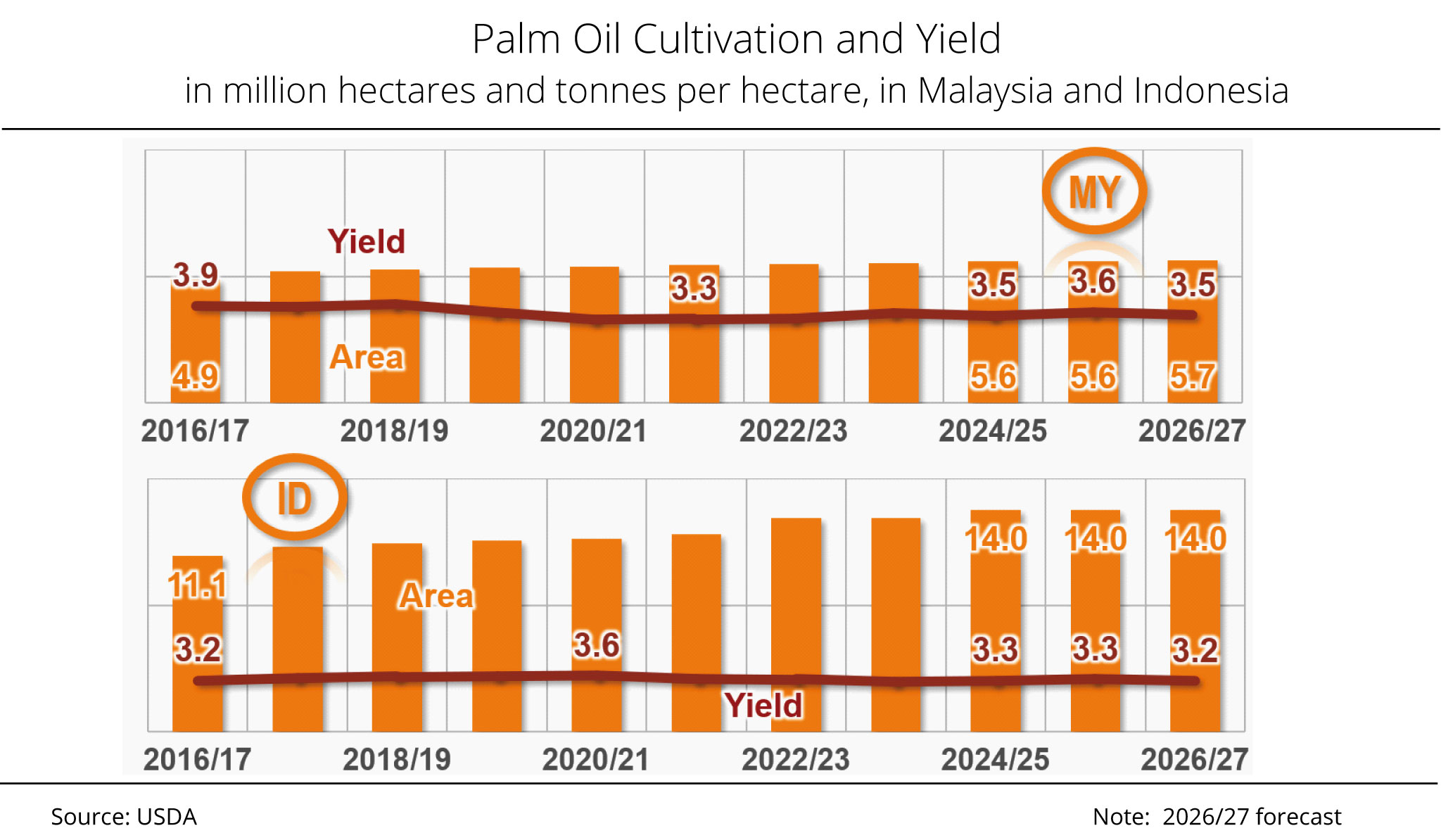
The planted area is estimated at 14 million hectares, unchanged from the previous year, whereas the yield per hectare, at 3.2 t/ha, remained slightly below the previous year's level.
Expansion opportunities in Malaysia are also largely exhausted: although the area is increasing slightly to 5.7 million hectares, yield is likely to be somewhat below the previous year's level at 3.5 t/ha. This shifts the focus in both countries to replanting.
Particularly in Malaysia, the replanting of older oil palm stands is gaining importance, given the lack of available land for expansion.
In the short term, this transition to younger plantings is temporarily weighing on production, because new plantings require several years to reach full yield potential.
In the medium to long term, however, it lays the foundation for more stable yields and higher land productivity. In Indonesia, too, future production levels will depend more heavily on how successfully existing plantations are replanted and higher yield potential is utilised through breeding advances.
The supply outlook is further tightened by biodiesel blending mandates. Indonesia wants to gradually become independent of diesel imports with a blending mandate currently raised to 50% and at the same time save foreign exchange.
Malaysia is also increasing regional blending requirements from 15% to 20%. These mandates significantly reduce export availability. For the world market, this means: Even with constant harvest volumes, less palm oil is available for export.
According to analysis by Agrarmarkt Informations-Gesellschaft (AMI), in future, growth will depend primarily on higher yields per hectare and replanting rates. Climate change will also influence growth in the palm oil sector.
Southeast Asia will have only limited additional exportable supply – which leaves the world market even more vulnerable to weather risks and production disruptions in both key countries.