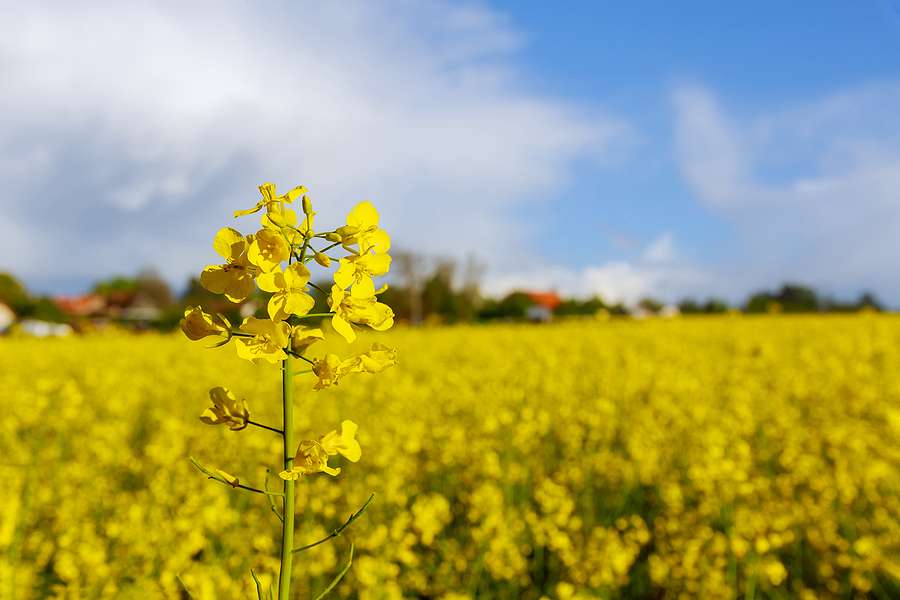




German farmers harvested more rapeseed in 2025 than in 2024. Despite the larger domestic supply, rapeseed imports remained plentiful in the first half of the 2025/26 season. Exports also exceeded the previous year's volume.
According to data from the German Federal Statistical Office, Germany imported approximately 3.1 million tonnes of rapeseed in the first half of the 2025/26 crop year, representing a 4 per cent increase compared to the previous year.
Delivering 873,400 tonnes, Romania replaced Ukraine as the leading supplier to Germany. By comparison, between July and December 2024, Romania delivered only 229,600 tonnes to the German market.
The increase in imports was likely due to the significantly larger harvest, as Romania more than doubled its production compared to the previous year, reaching a new record high. However, it remains open to debate to what extent the country acted as transit route for Ukrainian rapeseed.
According to data from the German Federal Statistical Office, Ukraine delivered roughly 752,500 tonnes, 39 per cent less than in the same period of the previous year.
France, Europe's third most important supplier, supplied 477,100 tonnes to the German market, according to research by Agrarmarkt Informations-Gesellschaft. This translates to an increase of roughly 64 per cent.
The Netherlands, a central hub in world trade, more than doubled its volume. Whereas Canada did not deliver any significant volumes over the past two years, imports of Canadian rapeseed rose to 99,800 tonnes in the first half of the 2025/26 season (July to December 2025). By contrast, Germany's rapeseed imports from Poland, Australia, Lithuania, the Czech Republic and Belgium declined.
Germany is the largest net importer within the EU so that exports were relatively small despite the larger harvest. In the first six months of the current season, Germany exported only around 64,100 tonnes of rapeseed, which was up 87 per cent on the same period last year. Most German rapeseed exports go to other EU member states, with Poland (around 34,600 tonnes), the Netherlands (7,300 tonnes) and France (5,200 tonnes) as the primary destinations.
Brisk foreign trade in German rapeseed