



For Amafilter®, part of Filtration Group, 2026 has been a landmark year. The business has not only continued to strengthen its position within the rapidly growing renewable fuels market, but it has also entered a significant new chapter following Parker Hannifin’s recent acquisition of Filtration Group.
For customers, it means access to an even broader portfolio of filtration solutions, enhanced technical support and the backing of one of the world's leading engineering companies, while Amafilter® continues to focus on the specialist filtration applications it is known for.
The timing could hardly be better. Demand for hydrotreated vegetable oil (HVO) continues to grow as governments and industry accelerate the transition towards lower-carbon fuels.
Producers are expanding capacity and processing increasingly diverse renewable feedstocks, creating new challenges throughout the production process.
One area receiving particular attention is bleaching, where effective filtration is essential for protecting downstream catalysts, maintaining fuel quality and improving plant efficiency.
For Amafilter®, that combination of market growth, new investment and continued product development has made this year a challenging, busy and exciting one.
A busy year driven by growth in renewable fuels
The renewable fuels industry has continued to evolve rapidly throughout 2026. HVO has become an increasingly important alternative to conventional diesel thanks to its compatibility with existing diesel engines and infrastructure, while offering significant lifecycle carbon savings when produced from sustainable feedstocks.
However, as HVO production increases, producers are moving beyond virgin vegetable oils and towards more sustainable raw materials such as used cooking oil (UCO), tallow, animal fats and other waste-derived oils.
While these feedstocks improve sustainability credentials, they also introduce greater levels of contaminants and variability into the production process.
This shift has led to growing demand for advanced filtration systems capable of handling higher solids loads, removing bleaching earth efficiently and maintaining consistent product quality despite changing feedstock characteristics.
Amafilter® has seen this trend first-hand during 2026, working with HVO producers across a range of renewable fuel applications and helping customers optimise filtration at some of the most critical stages of production.
Rather than filtration being viewed as a supporting process, it is increasingly recognised as an important contributor to operational efficiency, catalyst protection and overall production economics.
Why bleaching has become a critical stage in HVO production
Bleaching is one of the most important preparation stages before feedstocks enter the hydrotreating process.
During bleaching, absorbent bleaching earth is added to remove impurities including trace metals, phospholipids, soaps, oxidation products, pigments and other contaminants that could damage catalysts or affect fuel quality. Once these contaminants have been absorbed, the bleaching earth must be removed efficiently through filtration.
The effectiveness of this filtration stage has a direct impact on downstream performance.
Poor removal of bleaching earth can result in residual solids entering hydrotreating reactors, increasing catalyst fouling, creating pressure drops across equipment and ultimately reducing production efficiency. Product losses during cake discharge can also have a significant commercial impact in high-volume HVO facilities.
As feedstocks become increasingly variable, bleaching filtration must also become more robust, automated and reliable.
This is where Amafilter® believes filtration technology can make a measurable difference.
The Cricketfilter® Automated System: Designed for demanding bleaching applications
One technology is particularly highlighting within the HVO sector is the Cricketfilter® automated system.
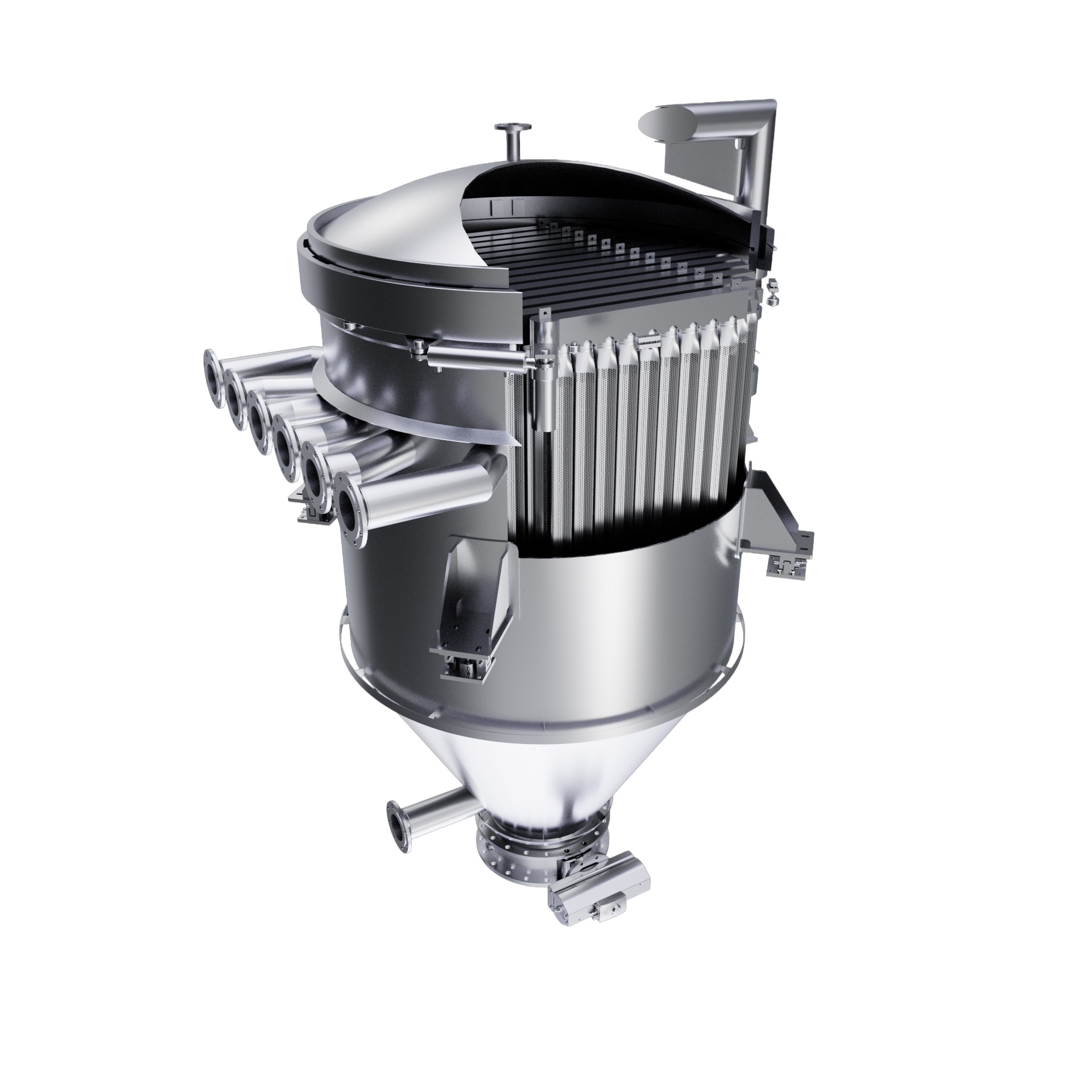
Designed specifically for difficult solid-liquid separation applications, the Cricketfilter® is a fully automated pressure filtration system that offers an alternative approach to conventional pressure leaf filtration in demanding bleaching duties.
The system uses engineered filter cloth technology combined with automated gas pulse cleaning to remove accumulated solids without rotating internal components. This enables efficient cake discharge while minimising manual intervention and reducing maintenance requirements.
For HVO producers, the advantages are particularly relevant during bleaching.
Key benefits include:
- Efficient removal of spent bleaching earth.
- Fully automated filtration and cake discharge.
- Long filtration cycles with consistent filtrate quality.
- Reduced operator intervention.
- Clean-in-place capability for faster turnaround between production campaigns.
- Reliable performance with challenging renewable feedstocks.
Due to the fact renewable feedstocks vary significantly depending on their origin, filtration systems must cope with changing contaminant loads without compromising performance. The Cricketfilter® has been developed to provide that flexibility while maintaining consistent filtration quality throughout production.
For producers seeking greater automation and reduced downtime, it offers a practical solution that aligns with the increasing digitalisation of renewable fuel plants.
Reducing filter aid consumption and improving sustainability
Bleaching is not only about removing contaminants — it is also about doing so efficiently.
Traditional filtration systems often require significant quantities of filter aid or pre-coat material to establish an effective filtration layer. This increases consumable costs and generates additional waste during cake disposal.
Depending on the application, the Cricketfilter®'s filtration media can significantly reduce the amount of filter aid required and, in some processes, eliminate the need for pre-coating altogether.
This delivers several operational benefits:
- Lower filtration media consumption.
- Reduced operating costs.
- Less waste requiring disposal.
- Shorter cleaning cycles.
- Improved product recovery.
For HVO producers processing thousands of tonnes of feedstock every year, reducing consumable usage also supports broader sustainability objectives by decreasing the overall environmental footprint of the bleaching process.
As renewable fuel producers continue looking for efficiencies across every stage of production, filtration is becoming an increasingly important contributor to both economic and environmental performance.
A complete filtration approach for HVO production
Rather than supplying equipment for a single stage of production, Filtration Group supports customers across the HVO filtration process.
This includes:
| Production stage | Filtration solution |
| Feedstock pre-treatment |
Removal of larger contaminants before processing. |
| Bleaching | The Cricketfilter® automated system technology provides efficient bleaching earth removal and product clarification. |
| Pre-hydrotreating polishing | Cartridge filtration to protect downstream catalysts. |
| Post-hydrotreating filtration | The process uses one Cricket Filter for catalyst recovery and a second Cricket Filter for renewable diesel polishing, making a cartridge filter unnecessary. |
| Final filtration | Fine filtration to achieve finished fuel quality requirements. |
This integrated approach allows producers to optimise filtration performance throughout the process rather than treating each filtration stage independently.
The goal is simple: maximise product recovery, minimise downtime and protect critical downstream equipment.
Energy efficiency remains a major industry challenge
Like many manufacturing businesses across Europe, Amafilter® recognises that high energy costs have continued to shape customer priorities during the course of the year.
For HVO producers, energy costs affect almost every part of the process — from heating feedstocks to pumping product through filtration systems and cleaning equipment between production campaigns.
Filtration performance has a direct influence on energy consumption.
Filters that block prematurely increase pumping pressure and cleaning frequency, while inefficient regeneration cycles consume additional compressed air, utilities and operator time.
Modern filtration technology, therefore, needs to focus not only on separation performance, but also on operational efficiency.
Cricketfilter has been designed with long filtration cycles and automated regeneration to reduce unnecessary interruptions and minimise cleaning requirements.
Its sectional gas pulse cleaning system enables efficient cake removal without complex internal moving mechanisms, helping reduce maintenance while supporting continuous production. This achieves a filter cloth service life of more than one year without requiring maintenance intervention.
Similarly, Amafilter® pressure filter leaf systems continue to provide large filtration surface areas and low-pressure-drop operation, helping producers maintain throughput while reducing energy losses associated with filtration.
In today's operating environment, improving filtration efficiency has become another way of improving overall plant energy efficiency.
Innovation continues beyond today's technologies
While the Cricketfilter® automated system is already delivering benefits for HVO bleaching applications, innovation remains a major focus for Amafilter®.
Throughout 2026, the engineering team has continued developing the next generation of pressure filter leaf technology, with a particular emphasis on improving performance in demanding industrial applications.
This results in a lower pressure drop across the pressure leaf filter and improved cake release from the filter leaves.
Although details remain under wraps ahead of a future launch, Amafilter® is working on an enhanced pressure leaf technology designed to build on the proven performance of its existing filtration systems.
The development programme is focused on delivering:
- Enhanced filtration efficiency.
- Improved durability in demanding operating conditions.
- Increased mechanical strength.
- Longer operational life.
- Easier servicing and maintenance.
These developments are intended to help customers achieve even greater reliability and efficiency while maintaining the proven benefits of pressure leaf filtration technology.
Looking towards 2027
As the renewable fuels market continues to evolve, filtration will become even more important.
The next generation of HVO plants will need to process increasingly diverse feedstocks while operating with greater efficiency, lower energy consumption and reduced environmental impact.
Filtration systems will need to be smarter, more automated and capable of handling wider variations in feedstock quality without compromising production performance.
For Amafilter®, the priorities heading into 2027 are clear:
- Continue supporting the rapid growth of HVO production.
- Help customers improve bleaching performance through advanced filtration technology.
- Reduce operating costs through automation and process optimisation.
- Invest in the next generation of pressure leaf filtration technology.
- Leverage the additional engineering strength and global reach provided by Parker Hannifin.
As the industry looks towards the new year, filtration will continue to play a vital role in making HVO production cleaner, more efficient and more sustainable.
For more information: Visit amafiltration.com