



EU member states imported less palm oil in the marketing year 2025/26 than in the previous year.
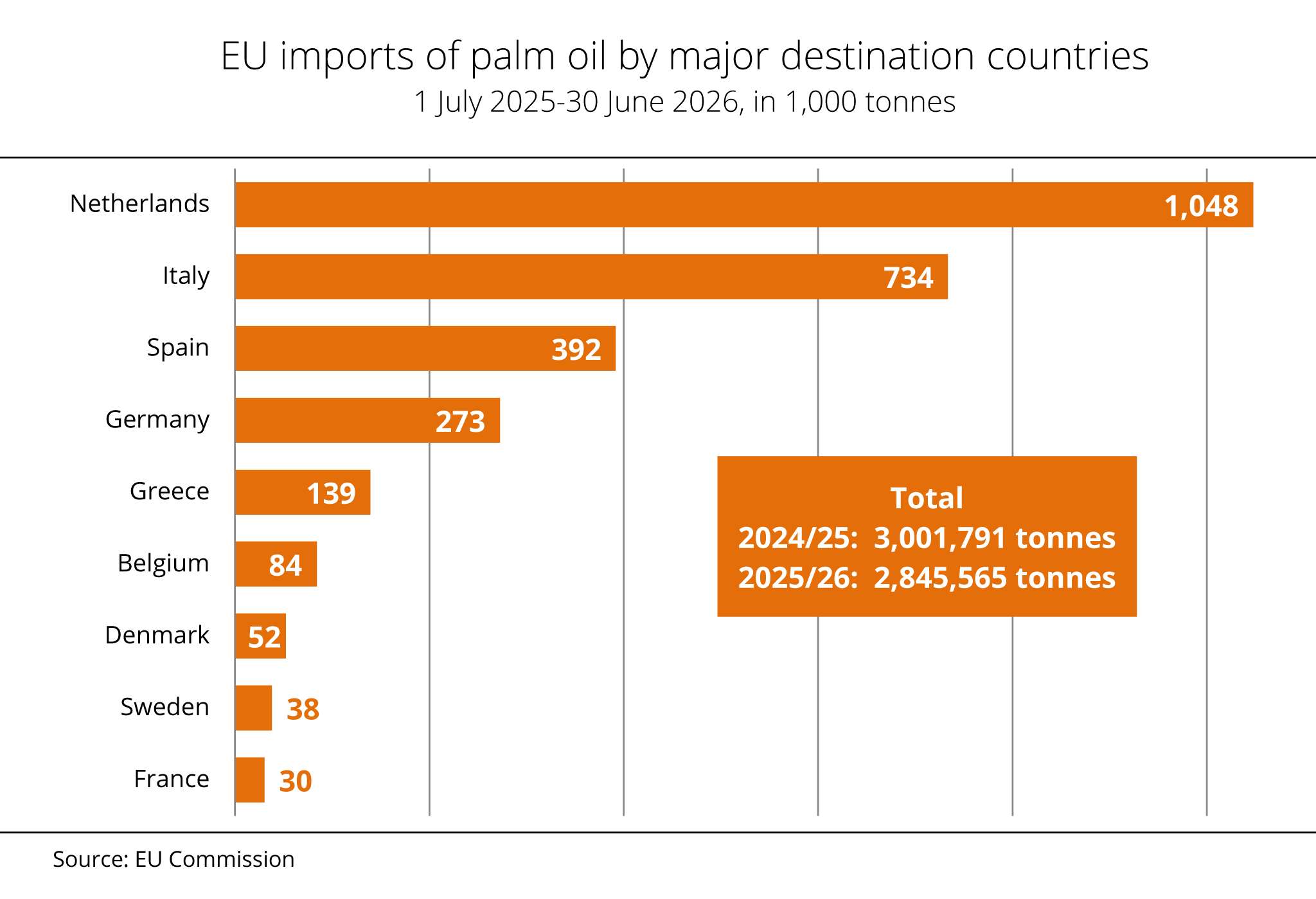
Imports totalled approximately 2.85 million tonnes, representing a decline of just over 5 per cent compared with a year earlier.
The Union zur Förderung von Oel- und Proteinpflanzen (UFOP) attributes this to the EU-wide changes in legal requirements in member states such as Germany and France, under which palm oil-based biofuels are excluded from counting towards national quota obligations or from receiving tax incentives as a result of the iLUC classification of palm oil.
Moreover, according to the Evaluation Report of the Federal Office for Agriculture and Food (BLE), average greenhouse gas savings from palm oil-based biofuels amount to 77.5 per cent, 10.5 percentage points lower than those achieved by biofuels derived from waste oils and fats.
This commodity group is displacing palm oil in Germany and the EU. The trend is also reflected in the import volumes of this feedstock category. According to investigations conducted by the Agrarmarkt Informations-Gesellschaft mbH (AMI), imports increased from 3.64 million tonnes in 2023 to 4.60 million tonnes in 2025. The double counting system, which has since been abolished in Germany, for the use of certain waste oils and fats had accelerated the displacement effect.
The Netherlands remains the leading importer within the European Union. At approximately 1.05 million tonnes, the country imported roughly 9 per cent more palm oil than in 2024/25.
Italy ranks as the second largest importer of palm oil, receiving nearly 734,000 tonnes, which represents a 12 per cent decline from the previous year. In contrast, Spain raised its imports significantly, by 35 per cent, to approximately 392,000 tonnes. Germany increased its imports 20 per cent to roughly 273,000 tonnes.